Palm Springs demands more from a window cleaner than spotless glass. The relentless sun, mineral-rich irrigation runoff, frequent dust storms, and a clientele that expects both discretion and reliability make window work here a specialist trade. Plus Ultra Window Cleaning’s training program reflects that reality. It is not a brochure of buzzwords, it is a living instructional system built to produce technicians who arrive on time, think on their feet, respect private property, and leave windows so clear customers notice the view before they notice the crew.
Why training matters here is simple: a mistake on a second-story sash can cost thousands in damage, a scratched pane will be remembered, and poor customer interaction will undo any technical skill. The program at Plus Ultra balances hard skills, safety, soft skills, and measurable standards so every team member represents the company and serves the Palm Springs market with competence.
What the curriculum covers and why each area matters Most training programs teach how to squeegee; few prepare technicians for the specific conditions found in and around Palm Springs. Plus Ultra’s curriculum is modular, sequenced, and field-tested. New hires move through classroom sessions, hands-on practice on mock facades, supervised jobs, and then a period of monitored solo work.
Core modules usually include the following:
- safety and fall protection, including ladder protocol, anchor points, and jobsite hazard assessment water-fed pole and pure-water technique, explaining water chemistry, pole handling, and reach optimization equipment care and preventive maintenance, covering pumps, filters, squeegees, and transport considerations customer relations and on-site professionalism, from arrival timing to dealing with pets and sensitive landscaping troubleshooting and specialty jobs, such as hard-water stain removal, screens, skylights, and glass restoration
Each module is tied to practical outcomes. For safety and fall protection, the trainee must demonstrate a pre-job risk survey, correctly set up ladder footings on gravel or pavers, and don harnesses when required. For water-fed poles, trainees must show they can plumb the pole to avoid air locks, adjust brush pressure without streaking, and maintain rinse patterns that conserve water while ensuring clarity.
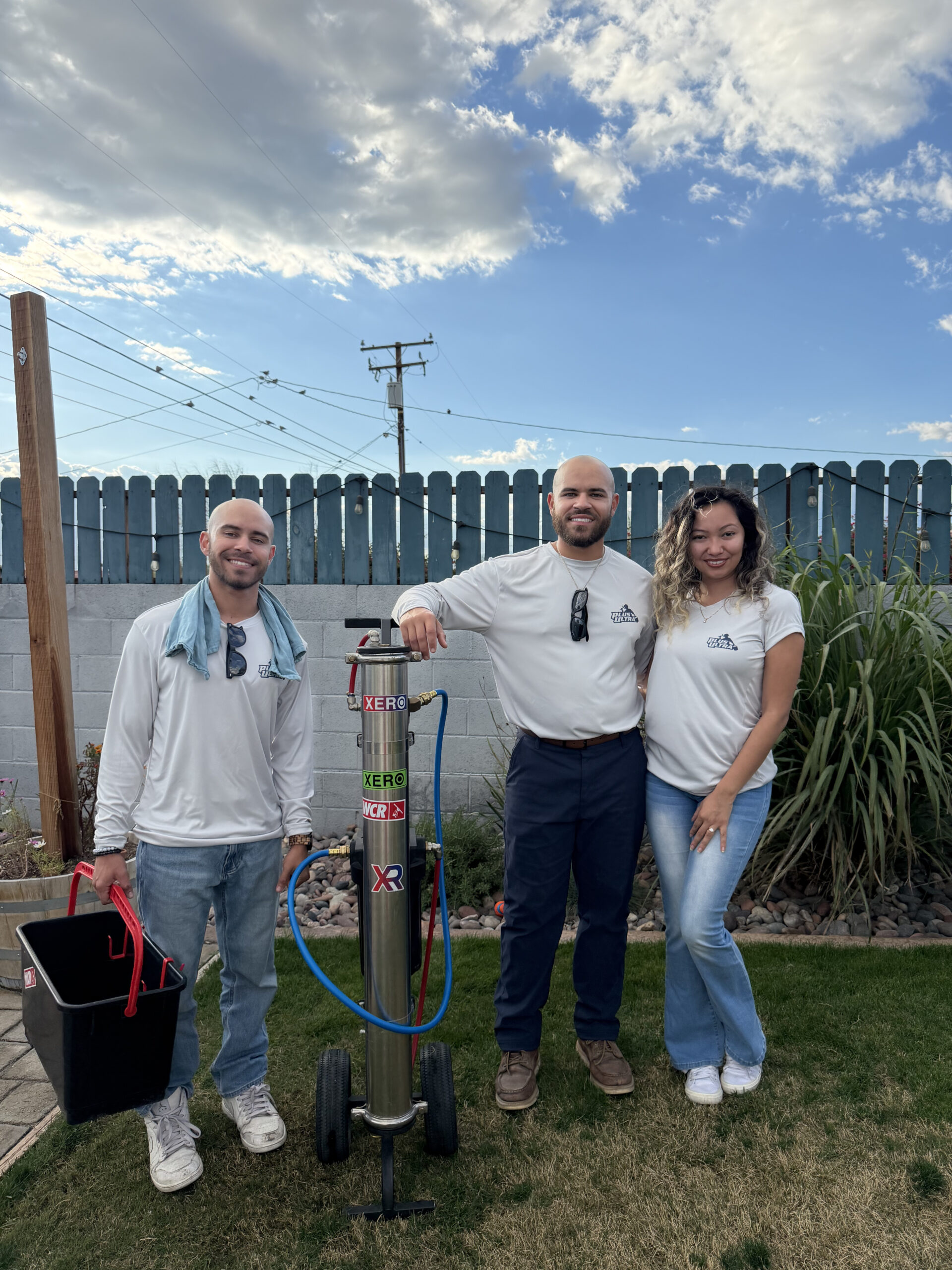
Training format and time commitment The program mixes classroom time with progressive field exposure. Expect an initial classroom block of two to four days depending on prior experience, followed by at least 40 hours of on-site shadowing. Trainees usually log a minimum of 60 to 120 hours of supervised fieldwork before being signed off for solo runs. Those numbers can vary depending on aptitude and prior experience; someone with commercial window experience may finish at the lower end, while a complete novice may need the full range.
Training is scheduled to accommodate the seasonal rhythm of Palm Springs. During the hotter months, practical sessions emphasize heat management, hydration strategy, and early morning start protocols. During the cooler months trainers focus on residue and pollen removal techniques that show up in spring.
Safety culture, not just compliance Safety is often treated as a checklist. Plus Ultra treats it as a culture. The company requires basic certifications that are widely accepted across the trades, such as OSHA 10 or an equivalent local safety course for field staff, plus in-house certifications for ladder safety and fall restraint tailored to window work. Beyond certificates, the program insists on documented pre-job briefings and a near-miss reporting habit.
A near-miss report is not a punitive tool. It is a learning artifact. When a technician notes that gravel shifted under a ladder during setup, the crew discusses how to mitigate that hazard before the next job. That habit reduces incidents over time and trains technicians to think two steps ahead rather than reacting.
Equipment training and maintenance discipline Technicians learn equipment in the same way a mechanic learns a car: intimate familiarity. That means knowing how to bleed an airlock in the water system, how to change carbon filters without introducing contaminants, and how to judge when a squeegee rubber needs replacement. Plus Ultra emphasizes preventative maintenance routines so crews are not improvising repairs on the job. A well-maintained rig reduces downtime, prevents damage to client property, and preserves quality.
Trainers also teach judgment on when to escalate. Not every stain should be rubbed aggressively. Some coatings and low-e glass require vendor specifications. Trainees learn to recognize specialty glazing, to document it, and to consult a supervisor before proceeding.
Customer service, trust and soft skills Technical skill wins the first glance, but soft skills win repeat business. The training program integrates customer service into every practical exercise. Trainees practice a standard arrival protocol: a polite knock or text when appropriate, a short explanation of work to be done, and an invitation to indicate sensitive areas such as fragile pots or newly planted turf. This simple script eliminates awkwardness and shows respect for a homeowner’s space.
Handling difficult situations gets specific attention. Trainees role-play scenarios such as an elderly client who insists the crew use a particular walkway that risks equipment damage, or a client who notices a scratch and becomes confrontational. Those role-plays teach de-escalation, how to take ownership without admitting liability, and when to involve a supervisor.
Measuring competence with real metrics Training is only effective if skills can be measured. Plus Ultra uses a combination of objective and subjective metrics. Objective tests include timed squeegee exercises with no more than a set number of streaks allowed on a mock pane, and practical exams where the trainee completes a multi-story facade under supervision within a safety checklist compliance threshold. Subjective assessment comes from customer feedback collected after the first several solo jobs and from field supervisors’ evaluations.
Early on, a trainee’s first solo jobs are labeled as “monitored” for a fixed period, typically three to five jobs. During that phase supervisors review notes and client responses, then decide whether the technician can proceed independently. The approach reduces warranty calls and protects the brand.
Specialty training for Palm Springs conditions Hard-water buildup, mineral stains from sprinkler overspray, and sandblasting from windblown grit show up often. The program dedicates sessions to stain identification and remediation strategies. Technicians learn which chemical cleaners to use sparingly, which mechanical methods protect glass, and when to recommend glass replacement.
There is also training on dealing with common Palm Springs exterior materials: stucco, travertine tile, and painted metal railings. Proper technique prevents etching and preserves finishes. For instance, pressure-washing near stucco requires specific nozzles and psi ranges to avoid driving water behind the finish. Trainees practice these skill sets on mockups before they encounter them in the field.
Environmental stewardship and water management Water use is a sensitive topic in the desert. Clients take note when crews waste water, and some properties have restricted access to irrigation shutoffs. Plus Ultra incorporates water-efficient practices into training. Pure-water systems are calibrated to recycle when appropriate, and trainees learn to measure water per job and to choose equipment that uses less water without reducing clarity.
Trainers emphasize rinsing patterns that limit soap use and require follow-up spot removal rather than blanket over-application. Trainees also learn to document water use for customers who request a sustainability report.
Mentorship, progression, and career path The program is designed not to churn entry-level workers but to create career technicians. Mentorship is formal: each new hire is paired with a mentor for the first 90 days. Mentors are compensated for training time, and promotions require a portfolio of work — photos, customer feedback, and supervisor sign-offs.
Progression tracks usually follow these stages: trainee, junior technician, lead technician, and site supervisor. Lead technicians not only execute work but also mentor newcomers, perform quality audits, and write post-job reports. Site supervisors add scheduling, client liaison, and incident management responsibilities. Compensation is structured to reward each step with a meaningful raise and more responsibility.
How the program protects customers and the company Training reduces risk in visible ways. Fewer mistakes mean fewer scratched panes and fewer warranty claims. Faster work with consistent quality builds customer trust, making it easier to win repeat contracts. The program’s documentation practices create an audit trail. Photographs before You can find out more and after, checklists signed by technicians, and digital job notes create clarity if a client raises a concern later.
There is also a financial angle. Investing in training reduces crew turnover and the knock-on costs of rehiring. It improves conversion rates on recommendations because customers remember crews who are professional and careful. Over a season, those marginal gains translate to lower per-job costs and higher lifetime value from repeat clients.
Real examples from field experience A common case: a technician with excellent squeegee mechanics starts a job on a south-facing penthouse. Wind gusts pick up dust that sticks to the wet glass, creating a smeared mess. A poorly trained tech might keep rinsing harder and spread residue, risking a second visit and customer dissatisfaction. A Plus Ultra-trained tech recognizes the pattern, adapts by adjusting the rinse technique and timing, and switches to a different brush angle to lift the grit without scratching. The job finishes with minimal rework and a satisfied client.
Another situation: a property manager requests a crew during a renovation that leaves abrasive plaster dust on windows. Instead of applying stronger chemicals that could affect hardware, the trained crew documents the condition, uses a staged approach to remove loose debris, and consults the manager about scheduling a final polish after other trades finish. That coordination reduces callbacks and signals professionalism.
Trade-offs and judgment calls Training does not eliminate all trade-offs. Spending more time on a delicate job increases cost, and not every client wants to pay for the extra care. Trainees learn to present options: a basic clean versus a premium restorative clean with an estimated price and timeframe. They learn to flag windows that will not respond to ordinary cleaning and to recommend vendors for replacements when necessary. Those conversations require tact and an understanding that transparency builds trust, even if the immediate sale is lost.
There is also the question of speed versus thoroughness. High-volume commercial jobs demand speed; luxury residential clients demand perfection. The training teaches technicians to read cues from job specifications and customer demeanor to adjust pace. For recurring accounts, the goal is to maintain a level of consistency so expectations are met over time.
Customer-facing outcomes and value proposition From a customer’s perspective, what does rigorous training produce? Fewer return visits, fewer damage claims, predictable scheduling, and crews that behave with respect. For commercial accounts, it produces minimal disruption during business hours and predictable scope adherence. For homeowners, it produces an experience where the crew shows up, completes work carefully, and leaves without disrupting daily life.
Plus Ultra frames this as an investment in reliability. The training program is not a hidden overhead, it is the service guarantee. When customers choose a company trained to the standards described here, they are buying peace of mind and consistent aesthetics.
How Plus Ultra measures program success Success metrics are embedded into operational reporting. Typical measures include first-pass quality rate, customer satisfaction scores collected after service, incident rates, and average time to competency for new hires. A first-pass quality rate in professional cleaning trades aims to be high, often above 90 percent, but the realistic target recognizes the complexity of some jobs; therefore trends are as important as single data points.
The company also tracks retention and promotion rates. A training program that raises competency but also encourages people to stay on the team creates compounded value. Mentors become trainers, supervisors become managers, and customer relationships deepen.
How clients can evaluate a company’s training without seeing it Customers cannot walk into a training session, but they can look for signals. Ask about onboarding time for new hires, whether crews are paired with mentors, and what certifications the company requires. Request documentation practices: do they photograph before and after, do they leave a checklist, and do they provide a written quote Window Cleaning Service near me distinguishing routine cleaning from restorative work? Those questions surface whether a company invests in training or treats cleaning as a quick gig.
A final note on expectations and guarantees No training program can promise perfection. Glass can crack from temperature differentials, imported panes may come with factory micro-abrasions, and client-provided access instructions may change. The mark of a trained company is how it responds: with honest documentation, timely communication, and a willingness to make things right when errors occur.
Plus Ultra Window Cleaning’s training program in Palm Springs is built around those principles. It prepares technicians to perform under local environmental pressures, to interact with customers thoughtfully, and to protect both property and reputation. For homeowners and property managers who care about the view, that preparation matters every time a crew arrives.
Plus Ultra Window Cleaning
Palm Springs, CA, United States
+1 (442) 234-3537
[email protected]
Website: https://plusultrawindowcleaning.com